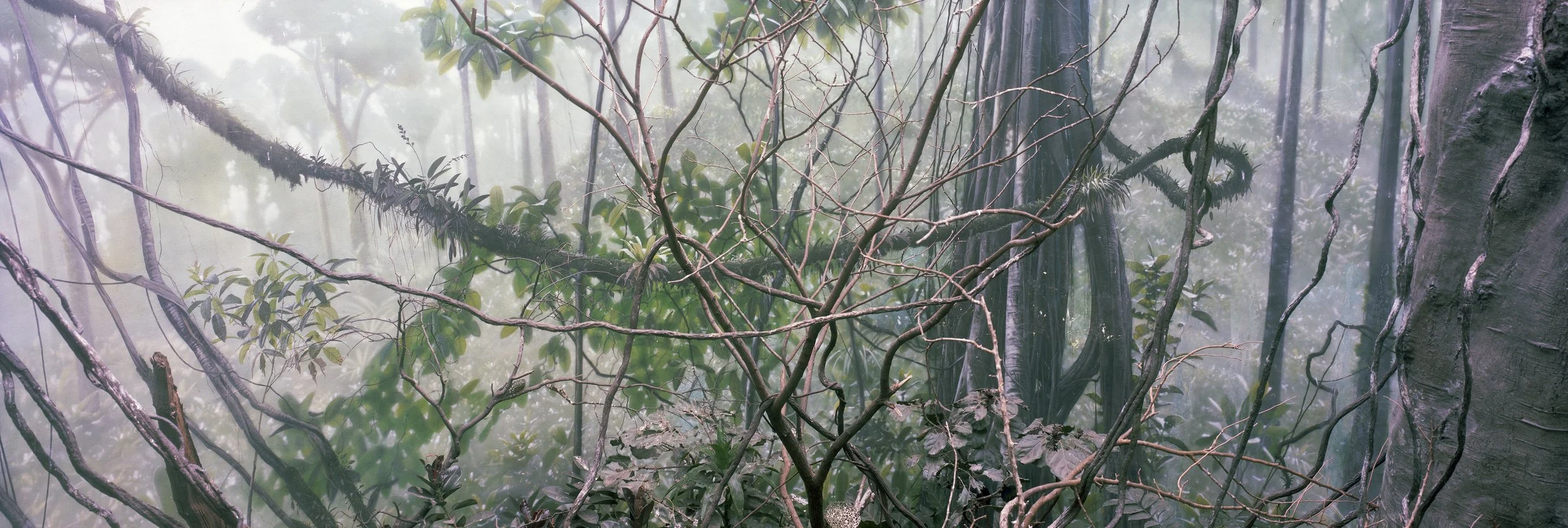
Paper Leaves and Concrete Trees

Bronx, New York 2025

View Photographs

The Bronx Zoo. It became a familiar landscape, a recurring backdrop to the unfolding drama of fatherhood. Laili, my daughter, possessed a bright, insistent curiosity, a relentless probing that, I suspect, mirrored her mother, Rania. Animals, for Laili, were not mere spectacles, but beings deserving of consideration, of empathy. Her questions, sharp and unyielding, cut through the veneer of orchestrated wilderness: Why are they here, Baba? Are they happy? These interrogations, born from Rania's quiet but firm opposition to such places, forced a reckoning.

Rania, she refused the zoo. Her refusal was not mere distaste, but a deeply held conviction, a recognition of the inherent injustice in confining these creatures for our entertainment. I respected it, even as I relished those days with Laili, the shared wonderment, the small triumphs of recognizing a new bird or witnessing the sight of the silvered langur, a type of monkey, born at the Bronx Zoo in November 2024. Yet, her absence was a specter, a constant reminder of the ethical tightrope we walked.

It took time, far too long, to truly see. To see past the curated habitats, the carefully worded placards, to the raw, inescapable truth of captivity. I would stand before the gorilla enclosure, before that great, hulking figure with its ancient, knowing eyes, and I would see something I could not deny. A profound, unwavering awareness. The way they turned their backs on the ceaseless gawking, the incessant tapping on the glass – a silent protest against the indignity of it all. They were not merely animals in a cage; they were prisoners, acutely aware of their subjugation. And in their eyes, I saw a reflection of something all too familiar – the enduring legacy of power, of control, of the cage.

The Bronx Zoo. Even the name carries a weight, a certain heft of expectation. You walk through those gates and you think you're seeing nature, maybe even doing your part for conservation. But what you're really seeing, if you dare to peel back the layers, is a reflection of ourselves, a distorted mirror held up to the ugliest parts of our history.

Think about it. These animals, the majestic tigers, the lumbering elephants, the brightly plumed birds – from where do they come? Not from some untouched Eden, but from lands once painted red by the brushstrokes of empire. Their ancestors, snatched from their homes, paraded as trophies, proof of conquest, symbols of a reach that stretched across oceans and continents. The zoo, then, is not a neutral space. It is a monument to that conquest, a carefully curated display of stolen lives.

And let’s not forget Ota Benga, a man, a human being, caged alongside an orangutan, a spectacle for the amusement of white onlookers. The audacity of that act, the casual cruelty with which it was executed, that's not a buried history. That's a foundational truth. The zoo, in that moment, became a stage for the grotesque performance of racial and species hierarchy, a reminder of who gets to look and who gets to be looked at.

They tell you it’s about education, about inspiring a love for the natural world. But what is education without context? What is love built on a foundation of captivity?

The very act of gazing, of treating these creatures as objects of entertainment, strips them of their agency, their dignity. They are reduced to specimens, to commodities, their complex lives flattened and simplified for our consumption.

And here, woven in the threads of good intentions, is the cold, hard logic of capitalism. These animals, these magnificent beings, are revenue streams, attractions, tools for fundraising. We pat ourselves on the back for "saving" them, while simultaneously profiting from their confinement. We prioritize the marketable, the charismatic, the "sellable," while the less aesthetically pleasing, the less profitable, fade into the background, a testament to our selective empathy.

This isn't just about bigger cages or better enrichment programs. It's about grappling with the fundamental arrogance of our anthropocentrism, the ingrained belief that we are somehow superior, entitled to dominion over all other life. It's about acknowledging that these creatures have cultures, languages, societies, ways of being that we barely understand. To lock them away, to deny their innate freedom, is not just physical violence; it is epistemic violence, a silencing of their stories, a denial of their very being.

But the caged refuse to be silent. They rebel in their own ways: the escape attempts, the refusal to breed, the self-inflicted wounds. Harambe's death, the gorilla shot to protect a child who wandered into his enclosure, was a tragedy, yes, but also an indictment. It was a stark reminder of the ethical tightrope we walk, the precarious balance between our desire to control and the inherent right of these creatures to exist on their own terms.

The zoo is a mirror. And what we see reflected in those cages is not just the beauty and wonder of the animal kingdom, but the enduring legacy of power, exploitation, and the deeply flawed hierarchies that define our world. To truly love and protect these creatures, we must first confront the uncomfortable truths of our own making. We must dismantle the cages, not just the physical ones, but the ones we've built in our minds. Only then can we begin to imagine a world where animals are not objects of our gaze, but partners in life.

Anthony Hamboussi, 2025